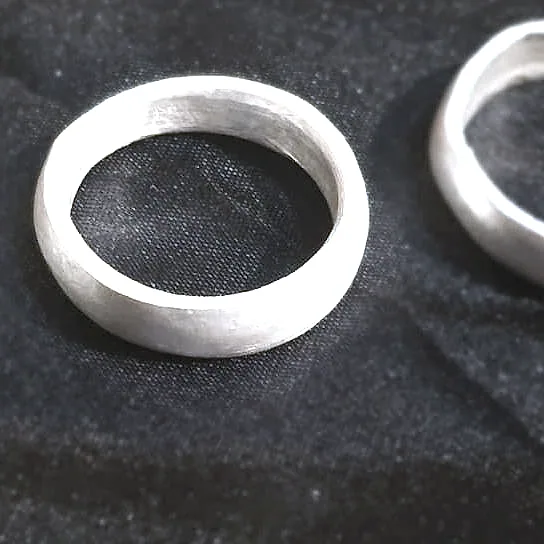
 In process of finishing
01
Filed
Silver heated until it glows, worked round and joined, then filed until the band runs at one consistent width the whole way round. Still flat-edged, still dull.
How they’re made
We were getting married. Buying a pair of bands was the obvious move right up until the thought arrived that they could just as easily be made.
It was never about the money. A band that had been made would mean more than one that had been bought, and even if it came out imperfect it would be ours. That seemed like the better end of the deal, and it was.
What wasn’t expected was everything after. A one-off job turned into the thing I now do — partly the process, partly the sheer spectacle of it. The flame. Metal glowing hot. Metal going molten and moving like water when a minute earlier you could have put it in your pocket.
That hasn’t worn off, and it’s where every band on this site comes from: the same method, the same bench, the same pair of hands.
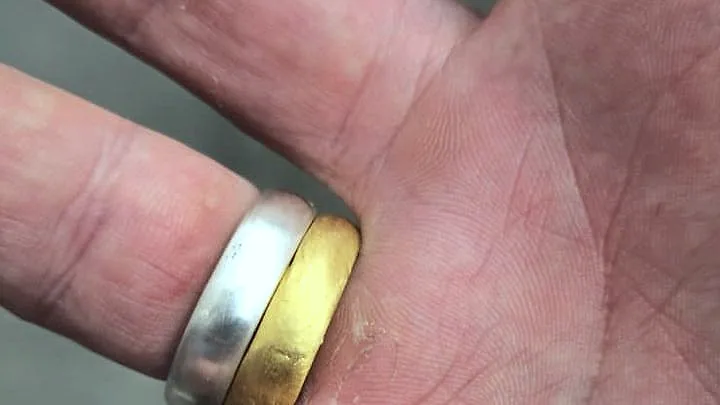
Gold has been through the torch here too. But what’s for sale is silver — pure silver, solid all the way through, never plated over something cheaper.
Silver is also, frankly, the honest material to sell at this price. A pure silver band that somebody actually forged is a real object. A thin gold-coloured one usually isn’t.
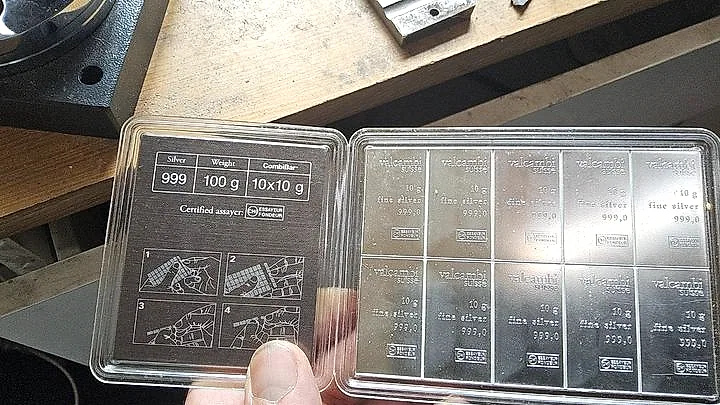
Every band begins as certified 999 fine silver — investment-grade bullion, 99.9% pure, assayed and stamped. Not 925 sterling, not scrap, and not a silver-coloured alloy: the same pure silver you could buy as a bar, forged into a ring by hand.
Four stages
Every band goes the same route. These are photographs of one going through it — same ring, four points along the way.
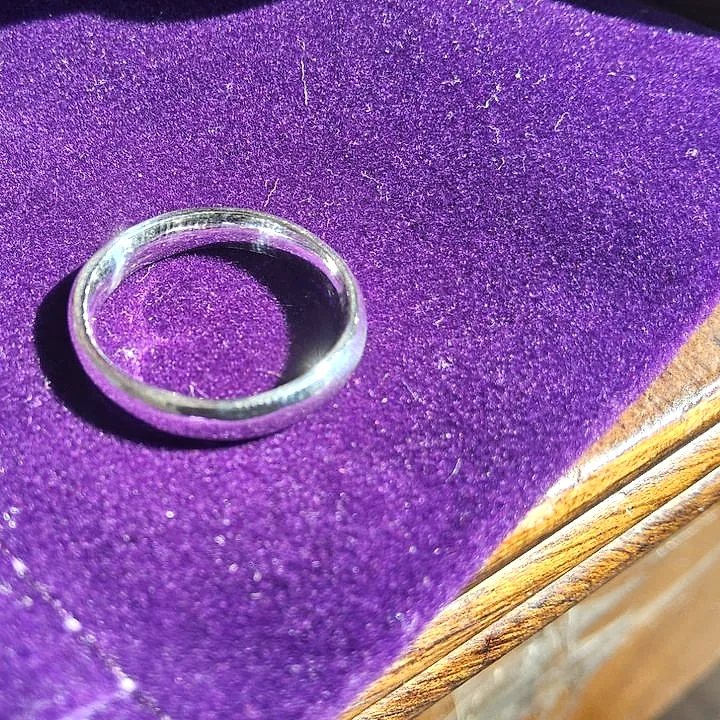
In process of finishing
Silver heated until it glows, worked round and joined, then filed until the band runs at one consistent width the whole way round. Still flat-edged, still dull.
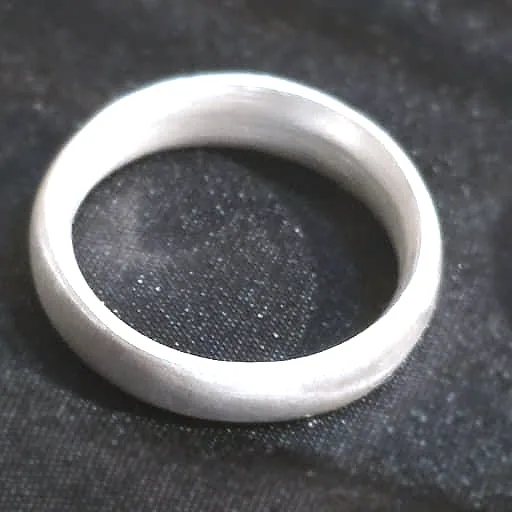 Finished product
The outer face is worked into a dome, then sanded through finer and finer grits until the grey goes even. A satin band stops here.
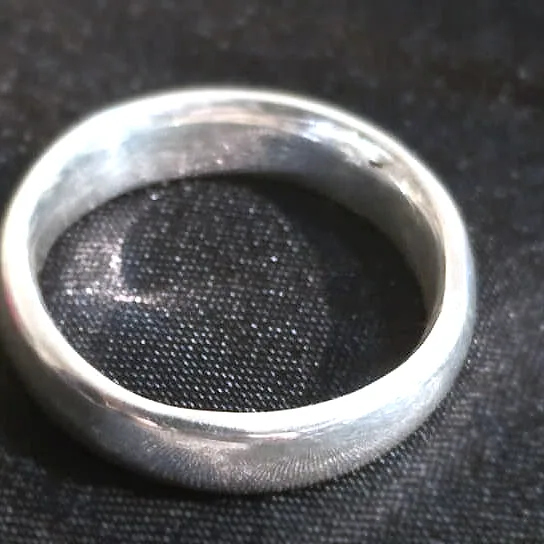 Finished product
Onto the wheel, until the grey turns to mirror and the band starts reflecting whatever is in front of it.
A band starts as a length of silver heated until it glows, worked round and joined. At that point it is faceted, lumpy and obviously hand-made, with the join line running straight down it.
Everything after that is subtraction — filing it to an even width, working the outer face into a dome, then sanding through finer and finer grits until the grey goes even. A satin band stops there. A polished one goes onto the wheel until it starts reflecting the room.
The join never entirely disappears, and I’ve stopped trying to make it. If you go looking on a finished band you can usually still find it.
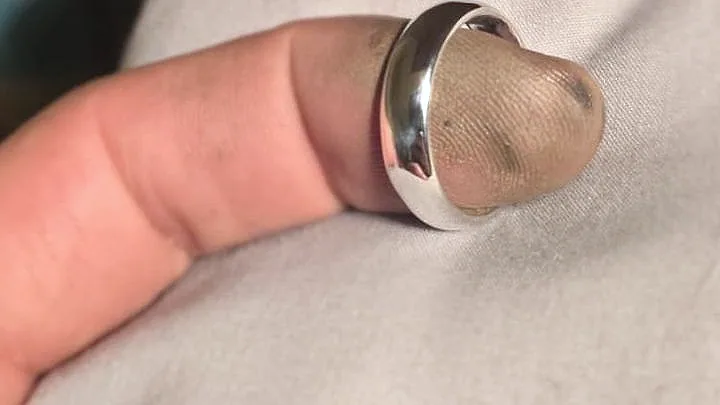
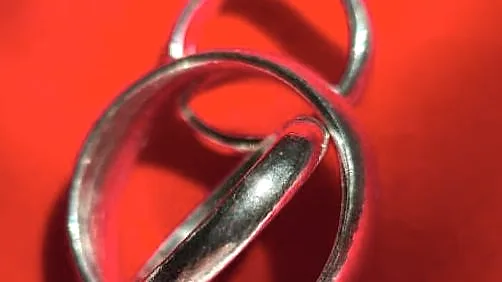
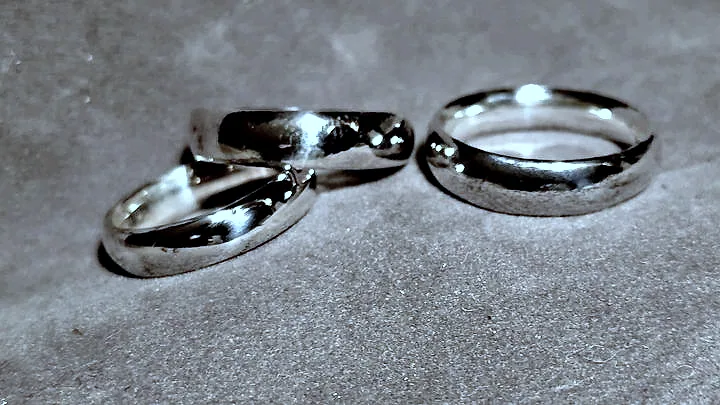
Everything on this site is a photograph of a band I made, taken on a phone at the bench. They’ve been cropped and colour-corrected — the workshop light is very orange and silver came out looking like brass — but nothing has been added, smoothed or rendered.
Which means the pictures show the real level of finish, including the bits that aren’t perfect. That seemed like the right way round.
Together
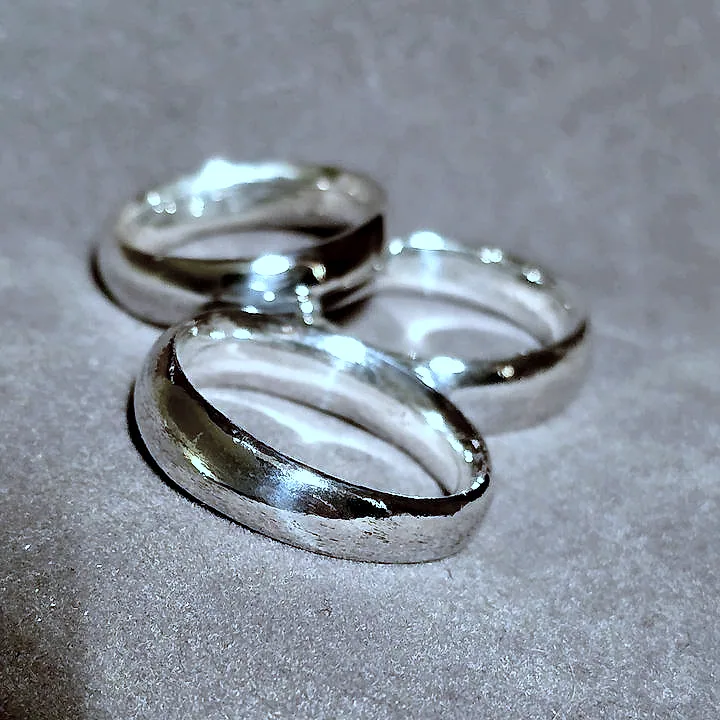
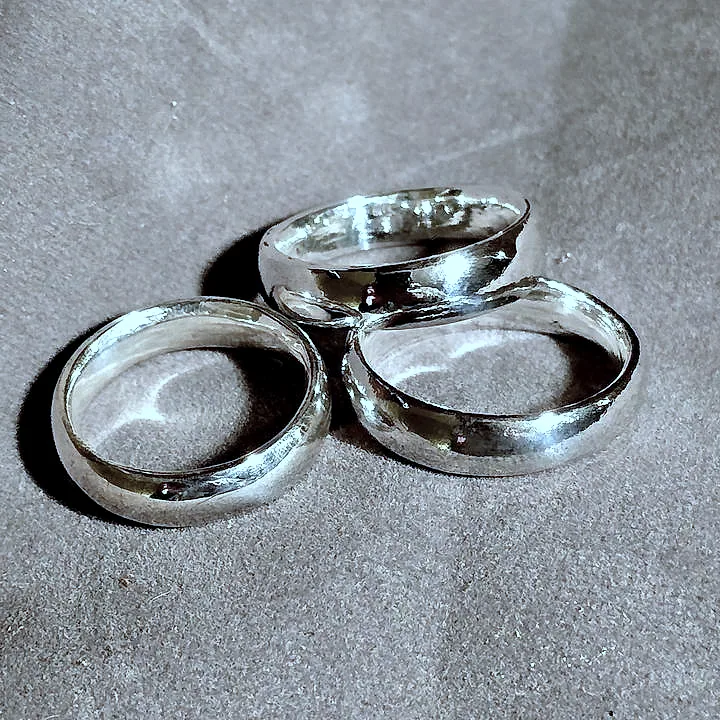
Pick a band and a size. I’ll confirm everything with you before it’s settled.